ADRIAN — The second annual State of the Western Lake Erie Basin Conference on June 26 brought together more than 200 people representing efforts to reduce the risk of harmful algal blooms in the lake.
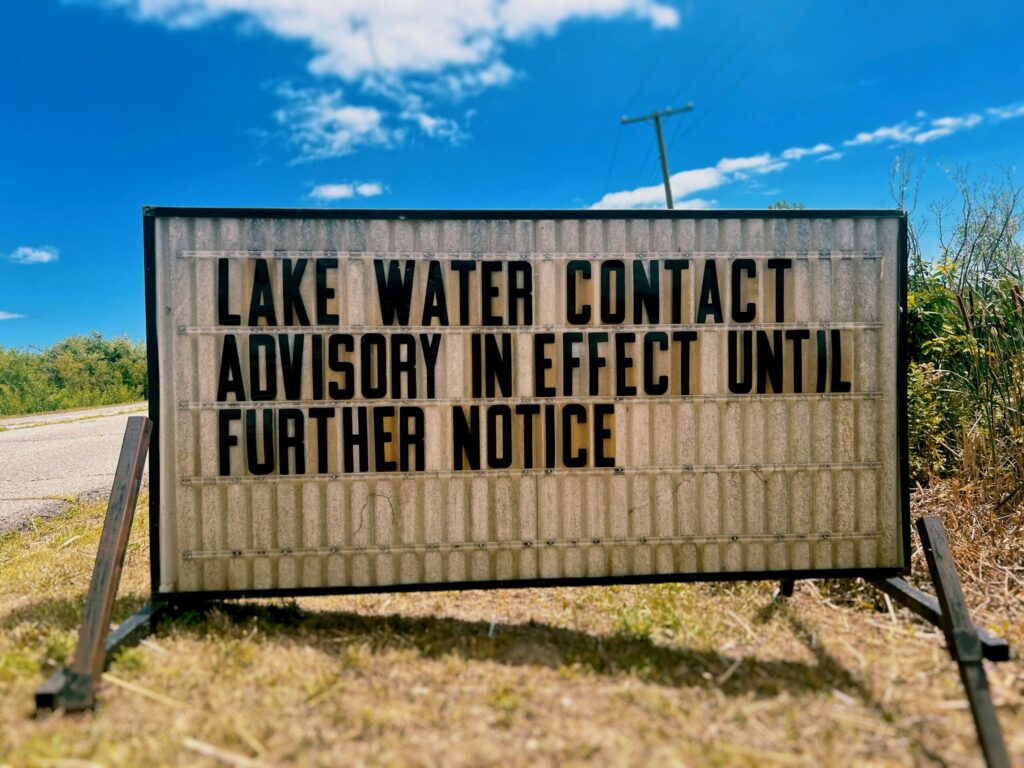
Each summer, Lake Erie is prone to runaway blooms of cyanobacteria, commonly known as blue-green algae, that can harm aquatic life and impact drinking water. More than 11 million people in the U.S. and Canada rely on the lake as their drinking water source.
HAB risk factors include nutrient-rich releases from wastewater treatment plants and runoff from farm fields and fertilized lawns; the effects of invasive species; and Lake Erie’s warm, shallow waters.
The daylong conference at Adrian College was presented by the Michigan Department of Agriculture and Rural Development, the Michigan Department of Environment, Great Lakes and Energy, the Michigan Department of Natural Resources, the University of Michigan Water Center, and the Hillsdale Conservation District. It offered networking, discussion, and updates on phosphorus management in Michigan’s portion of the Western Lake Erie Basin.
“We wake up every day dedicated to protecting the resource that shapes our culture, economy, and way of life,” said EGLE director Phil Roos. “The health of the basin and the effort to reduce harmful algal blooms is personal to us.”
“Lake Erie is an invaluable resource that we’re working to protect as part of MDARD’s mission to improve quality of life for all Michiganders,” said Michigan Department of Agriculture and Rural Development director Tim Boring. “This conference is an opportunity to work with our partners, the community, and producers on ways to achieve meaningful outcomes for this vital waterway.”
Conference attendees represented agriculture, trade, conservation, government, education, industry, environmental protection, and more. Much of the focus was on goals to reduce nutrients that feed harmful algal blooms.
Michigan’s recently updated plan for combatting algae blooms in western Lake Erie includes measures to reduce phosphorus runoff into the basin by a sustained 40% from 2008 levels.
Phosphorus is essential for growing crops in the Western Lake Erie Basin, but can enter waterways during rains or floods and ultimately reach Lake Erie.
Total phosphorus loads in the basin are down by nearly 23%, exceeding a 20% aspirational goal for the basin, largely due to point source reductions. At the Great Lakes Water Authority’s Water Resource Recovery Facility, for example, phosphorus loads dropped by more than half, from 764 metric tons in 2008 to an average of 362 metric tons between 2018 and 2022.
EGLE’s Water Resources Division has developed a plan to roll out lower phosphorus limits in U.S. National Pollutant Discharge Elimination System permits for all major wastewater treatment plants in the WLEB, as well as a new guidebook to help operators meet these targets.
Reaching the full 40% phosphorus reduction target will require progress in controlling nonpoint source and agricultural sources of pollution.
MDARD, EGLE, and the DNR review and revise the DAP every five years based on progress and changing needs. Key strategies include:
- Continued work with WLEB communities to tighten sewage treatment facility permits.
- A new Soil Health Investment Program in partnership with conservation districts in Michigan’s Hillsdale, Lenawee, Monroe, and Washtenaw counties.
- Partnerships for agricultural conservation.
- Regenerative agriculture principles and practices that reduce nutrient loss, mitigate impacts of extreme weather, and prioritize market-driven agricultural diversity that can power rural communities.
- Expanded water quality monitoring.
- Online modeling through the Great Lakes Watershed Management System.
- Formation of the WLEB Community Advisory Group.
- Work by the DNR, conservation group Ducks Unlimited, and partners to restore more than 300 acres of wetlands in the Stony Creek and South Branch River Raisin watersheds.
Conference speakers and presenters also included leaders and representatives from the U.S. Environmental Protection Agency, Ducks Unlimited, the Michigan State University Institute of Water Research and Department of Fisheries and Wildlife, the University of Michigan Water Center and School for Environment and Sustainability, the University of Maryland Center for Environmental Science, The Nature Conservancy, The Ohio State University, and the University of Wisconsin-Madison.
For more information on the DAP update and Michigan’s actions in the WLEB, visit Michigan.gov/MDARD-WLEB.
