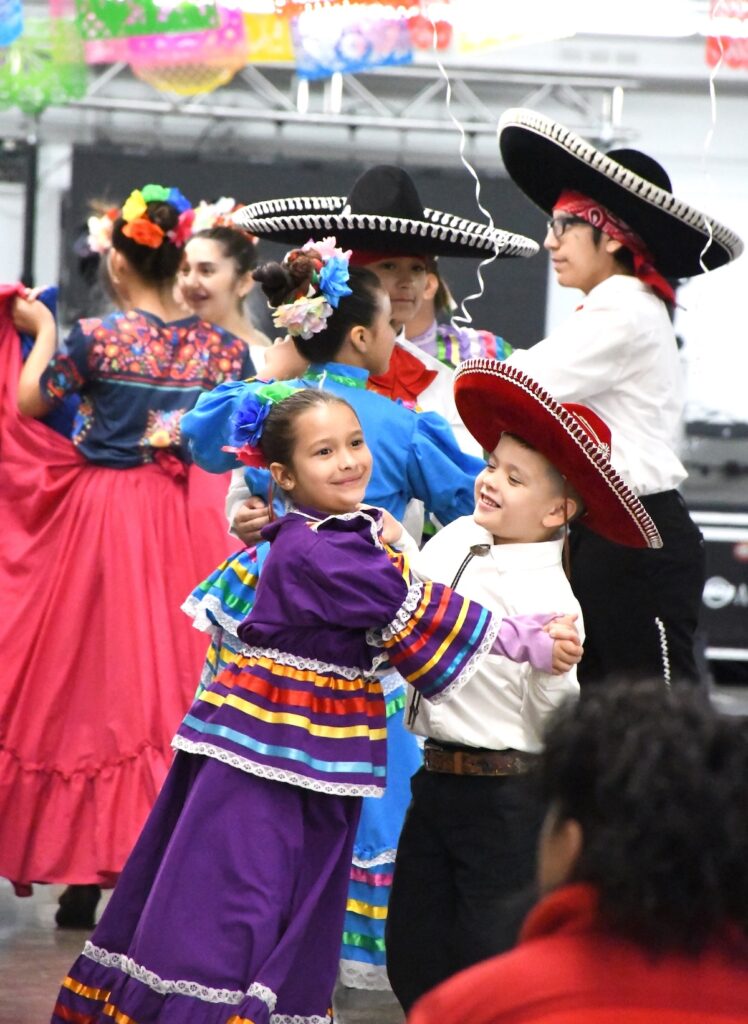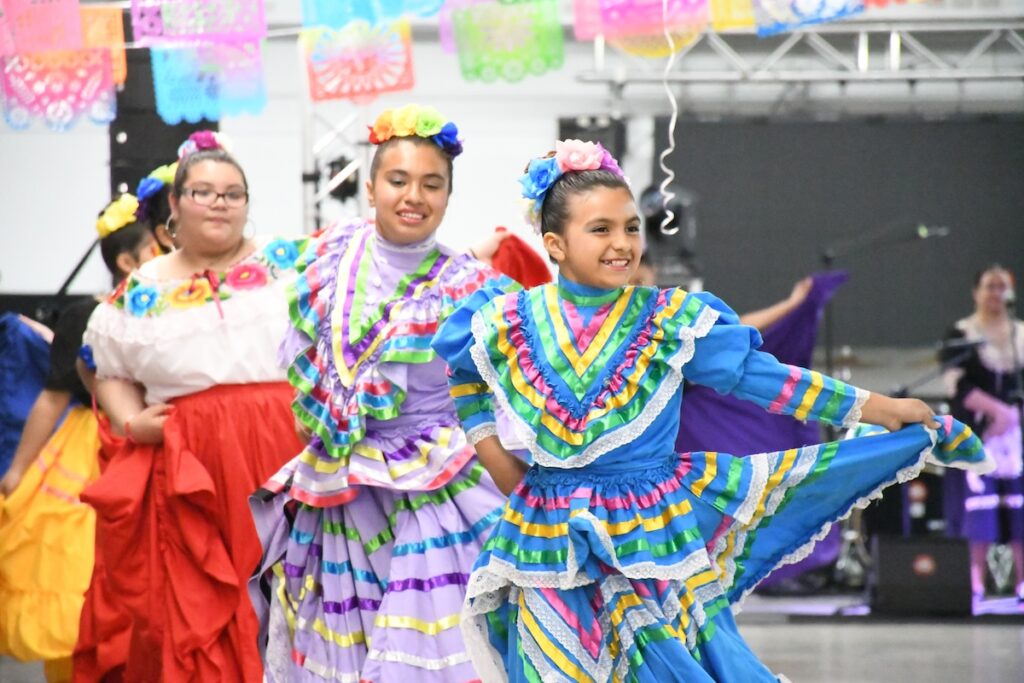
ADRIAN — Teresa Gutierrez started dancing when she was 3 years old, and she still remembers how it felt.
“It was joy,” she said. “It felt like I was the only person on that stage, and I wasn’t dancing in front of a bunch of people, it was just me in my own space.”
Now she’s helping a new generation of children and teens experience the same thing, as she takes the reins of an Adrian dance troupe whose roots go back 50 years.
Today, the troupe is called Raíces de mi Tierra — Spanish for “roots of my town.” It provides an opportunity for young people to learn about the folkloric dance traditions of Mexico, connecting to both history and heritage.
The dances they learn reflect the stories of different regions. For example, one of the dances, Las Chiapanecas, comes from Chiapas in southern Mexico, while Jarabe Tapatío, also known as the Mexican Hat Dance, is from Guadalajara in the west.
In 1976, when Blanca Martinez started a children’s dance troupe in Adrian, it was called Cielito Lindo. Adelita (Yaya) Solis took over in 1981.
Solis and Martinez made all of the girls’ skirts for the dances by hand. That was no small task, since each one contained eight to 10 yards of material. They would practice anywhere they could — mainly in people’s garages, driveways, and back yards. Emily Martinez and Annita Galnares, now Aranda, were instrumental in spreading the word about the troupe. Solis’ best friend — Juliana Ramirez, who was also Gutierrez’s mother — helped with hair, makeup, costumes, and more.
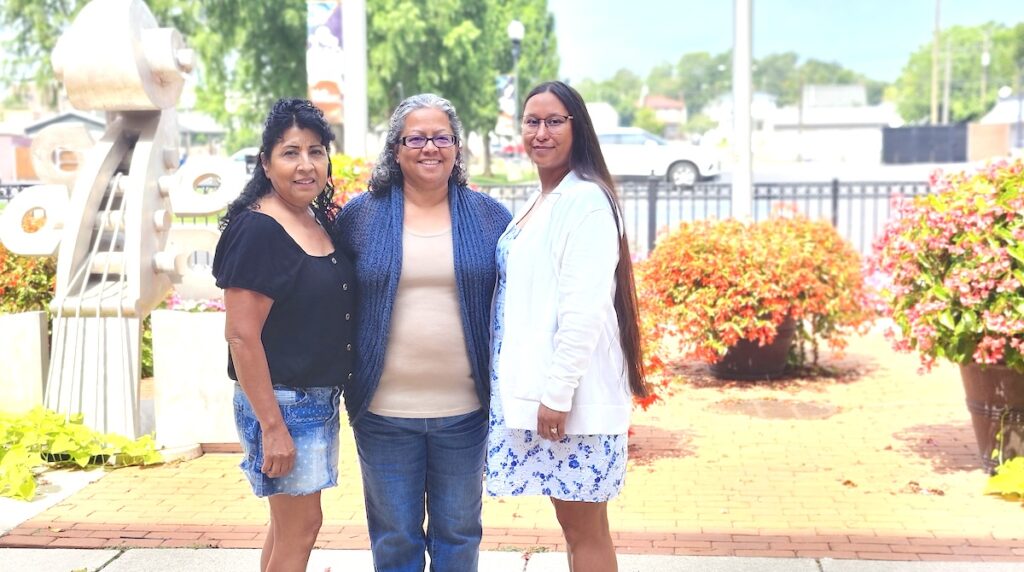
Raquel Ybarra was one of the dancers in those early days, starting when she was 10 years old. She would later become the group’s leader, using the name Tropa de Niños Pequeños (troupe of young children).
For Ybarra, teaching dance isn’t just a way to honor her own ancestry, it’s a way to promote understanding between different groups of people.
“We want people to love to learn about other cultures and heritages,” she said. “We are all equal regardless of our culture, our heritage. Let’s learn about each other.”
Once, while she was teaching at Madison Elementary School, a little girl told her she wanted to dance but her grandmother didn’t think she could be part of the group — “because I’m not Mexican.”
“I said, ‘you don’t have to be. You can join the group,’ ” Ybarra said. “She danced for, I want to say, at least three years.”
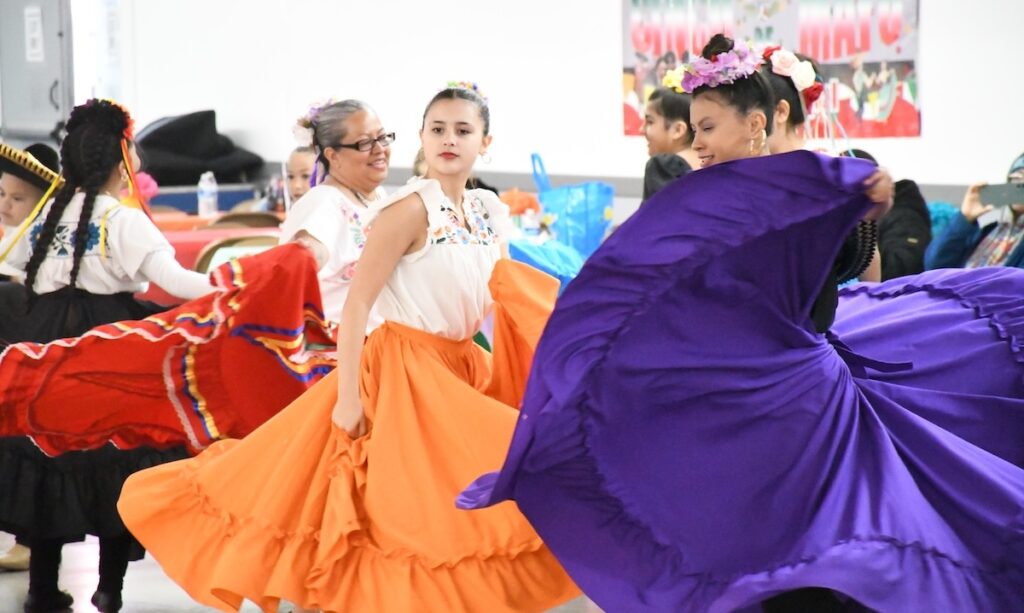
Over the years, Ybarra developed her techniques for teaching dance, often learning from her students along the way. The Madison school district is home to the countywide program for deaf and hard-of-hearing students. In her second year of teaching, Ybarra had a student who wore hearing aids in both ears and had trouble filtering sound, so hearing instructions while music was playing and other children were moving around her was very difficult. So Ybarra began teaching with gestures alongside words.
“I started doing the hand motions to signal her when to move, when to turn,” she said. “But I noticed it didn’t just benefit her, it benefited the other children.”
Ybarra also taught in Morenci for several years, and ran an after-school dance club there. She would teach dances after school on Thursdays in Morenci and on Fridays in Adrian — and when they came together for a performance, “you could never tell they never practiced together.”
When she retired from leading the troupe, Ybarra turned it over to Gutierrez, who gave the group its current name, reflecting the fact that the dances are also part of Adrian’s heritage as a community.
Gutierrez and her three brothers grew up in the troupe, learning not just from Solis but also from their mother.
“She would have us practice outside of Yaya’s practice, at home,” Gutierrez said. “She was very into the posture of the dance and making sure you were looking out at the crowd and not down at your feet.”
She remembers always wanting to learn more.
“I loved the stage,” she said. “I never wanted to get off the stage.”
As a student at Adrian High School, Gutierrez also taught other students to dance as part of a diversity group she started one year.
“I’ve never fallen out of love with it,” she said. “It’s always been something very important to me.”
Now she’s looking forward to writing the next chapter in the group’s history, teaching folklórico dance traditions to a new generation.
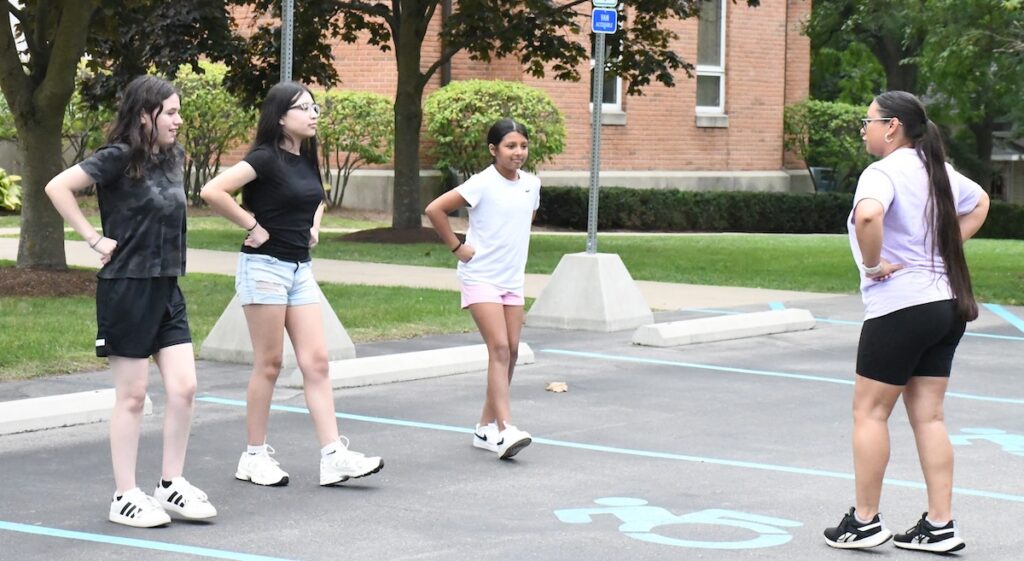
She plans to run the group year-round, with each season starting and ending in July, and a break from Thanksgiving to mid-January. The group is now under the umbrella of Chico’s Cinco de Mayo, a 501(c)(3) nonprofit organization, though they will do their own fundraising separately from the Cinco de Mayo festival. Supporters include the Adrian chapter of Latino Leaders for Equity Advocacy & Development (LLEAD) and the Adrian Diversity Event Fund.
Upcoming performances include one scheduled for 6 p.m. Wednesday, Sept. 30, at the Adrian District Library, 143 E. Maumee St.
Although the season has begun, dancers from ages 4 to 18 are still welcome to join the group through the end of September. No experience is necessary.
Anyone interested in joining can email raicesdemitierra.2608@gmail.com for more information.