
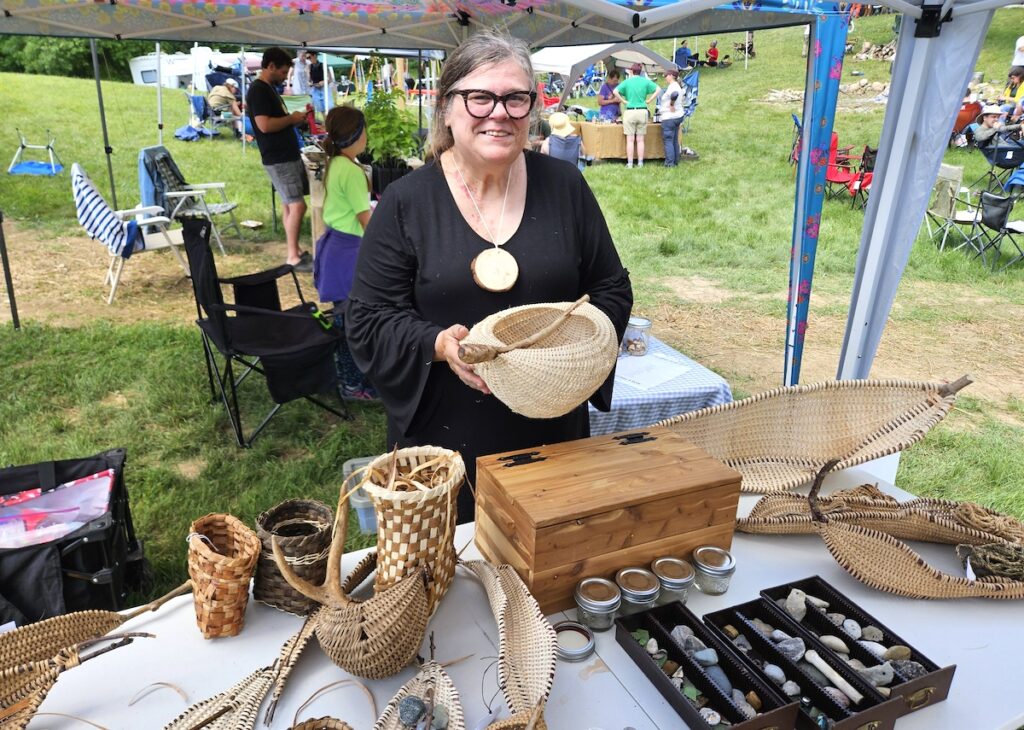
NORVELL TWP. — The smell of a campfire filled a bowl-shaped field lined with vendors selling medicinal tinctures, plants, soaps, and pastries. A pack of kids, made delirious by the long summer days, ran around, wildly waving sticks and chasing fireflies. Scanning the crowd, I noted the murmur of conversations, occasional peals of laughter, people tending the fire, and the squawk of someone’s pet quail.
I was at the annual Great Lakes Foragers Gathering, one of the longest-running foraging events in the country, and a unique offering in southeast Michigan. Organized each year around the summer solstice by the local organization Will Forage for Food, this year’s event took place at Frog Holler Farm near Brooklyn.
While foraging from the land is the central theme of the event, it brings together many folks across the “I love plants” spectrum: backyard gardeners, land stewards, bushcrafters, foragers, artisans, herbalists, and plant healers. Collectively, this group has clocked significant time out-of-doors, evidenced by deep attention spans and heightened awareness of their environments. The air had a friendly, inclusive quality. The unspoken dress code: cargo pants and mushroom accessories.
Before attending, nobody mentioned to me that this event could also be billed as a foodie destination.
I sampled a sip of hickory nut milk that had been recently boiled down from a bucket of foraged nuts. The texture and flavor of the fresh milk were full-bodied, a far cry from the watered-down nut milks I was accustomed to buying from the grocery store.
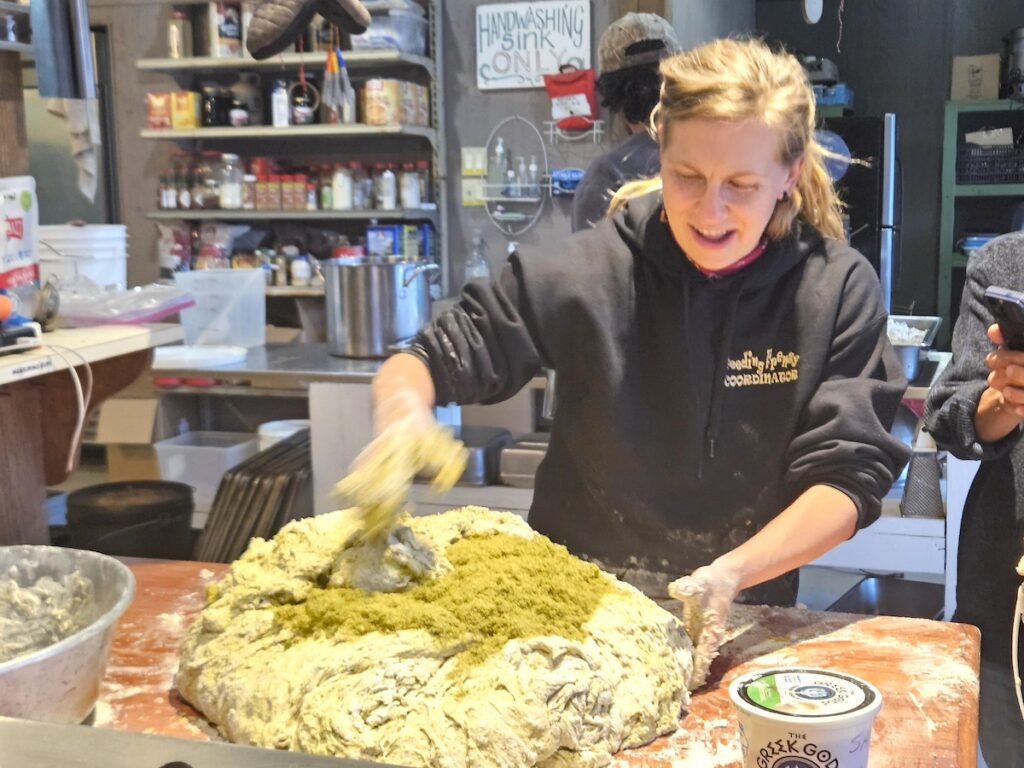
It wasn’t my first notable culinary experience of the weekend. Every day, a team led by powerhouses Colleen Perria and Angie Martin worked around the clock in the open-walled community kitchen to prepare dishes that rivaled those of any coastal city’s most sought-after fine-dining experience.
One dinner included puffball-encrusted catfish tacos with grape leaves and lambsquarter, served with a paw paw crema, bergamot black beans, and a six-flower slaw.
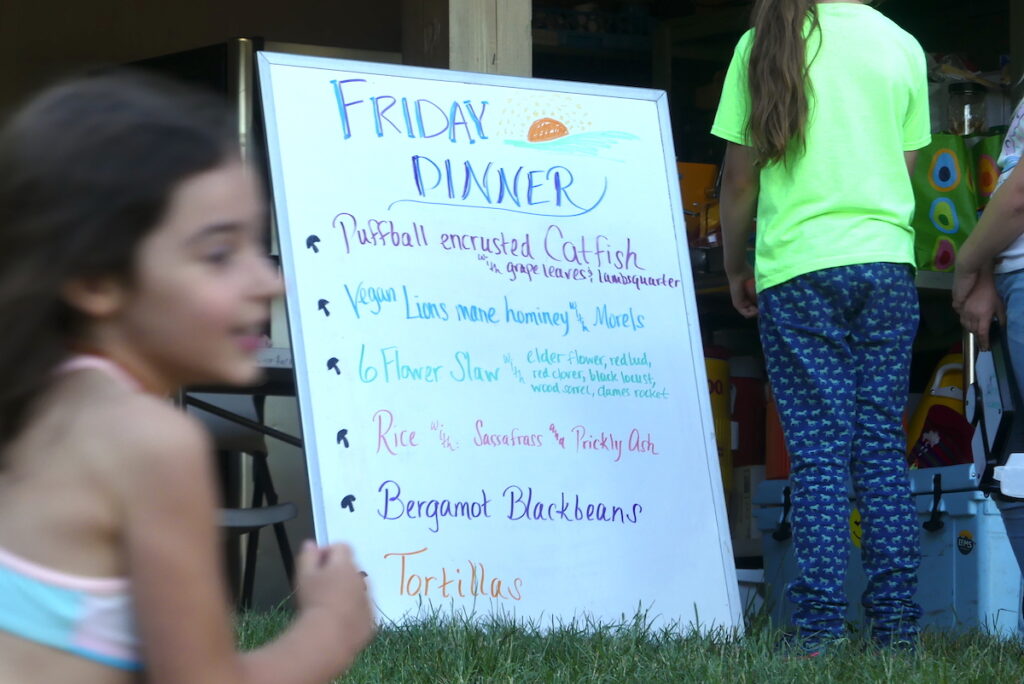
These wildly distinct dishes share a couple of common ingredients: they showcase Michigan-foraged foods and are prepared with care and attention by people working collectively to restore a human connection with the land. Still, it seemed almost impossibly ambitious to me to offer such labor-intensive meals, so I went to the organizer, Rachel Mifsud, to better understand the process.
“We have a group of people who forage all year long,” she told me. “We have four deep freezers full of food, and keep a spreadsheet of everything we’ve collected. Two months before the event, we sit down and start talking about the menu based on what we’ve got on the list… but the community brings in foraged food we didn’t know we were getting. Half of what they’re using right now in the kitchen, they didn’t know they were getting.”
I replied that this could add a lot of logistical uncertainty to an already arduous undertaking, but she shook her head. “For them, that’s part of the fun. They love the challenge of that.” Her favorite food? She thought for a moment before smiling, “They make a really good wild rice porridge.”
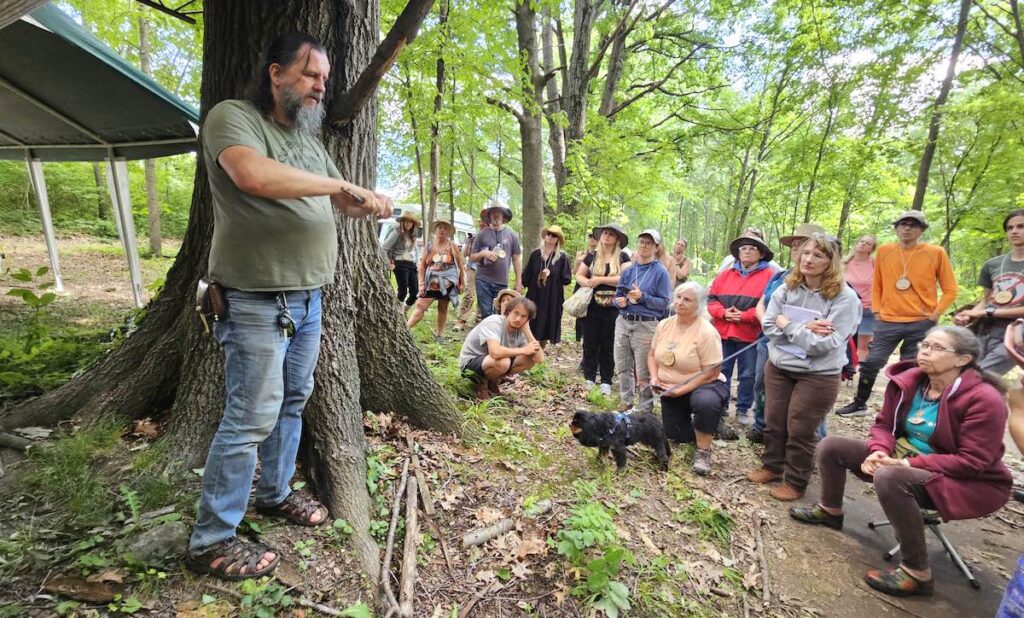
While inspiring land reconnection through the belly is one (very effective) approach, the event equally appeals to the mind and hands. Workshops ran all weekend. There were classes geared toward healing and medicine making, such as wilderness first aid and herbs for pain relief. Herbalist-led plant walks not only introduced species but also delved into the ethics of foraging, demonstrating ways to harvest for future abundance rather than depletion. There were options for kids and crafting classes featuring corn brooms and birch bark earrings. Several workshops leaned into the culinary aspect. At one, taught by master mixologist Angie Jackson, participants learned how to prepare herbal bitters, going through each plant to better understand their properties before creating a blend to take home. One night, there was even a talent show where Mifsud energized the crowd with her yodeling.
Mifsud’s organization, Will Forage for Food, which aims to cultivate a community of foragers and nature enthusiasts, began hosting the gathering 15 years ago. What began humbly as a handful of people at a potluck continued to garner interest year after year. The 2026 gathering marked a major milestone, with over 300 attending and tickets selling out.
Despite its growing popularity, the event is not run for profit. This year’s ticket price was $275 per individual, kept intentionally affordable to make the event accessible.
As it expanded, people began chipping in to build capacity: foraging year-round to reduce the food budget, bringing in more volunteers for marketing and kitchen work, and adding work-trade ticket options to help keep the bathrooms clean and do groundskeeping. One big cost-saving switch this year was to offer only breakfast and dinner, and to invite attendees to make their own “Stone Soup” for lunch over the fire. I checked in with Mifsud to see how it had been going.
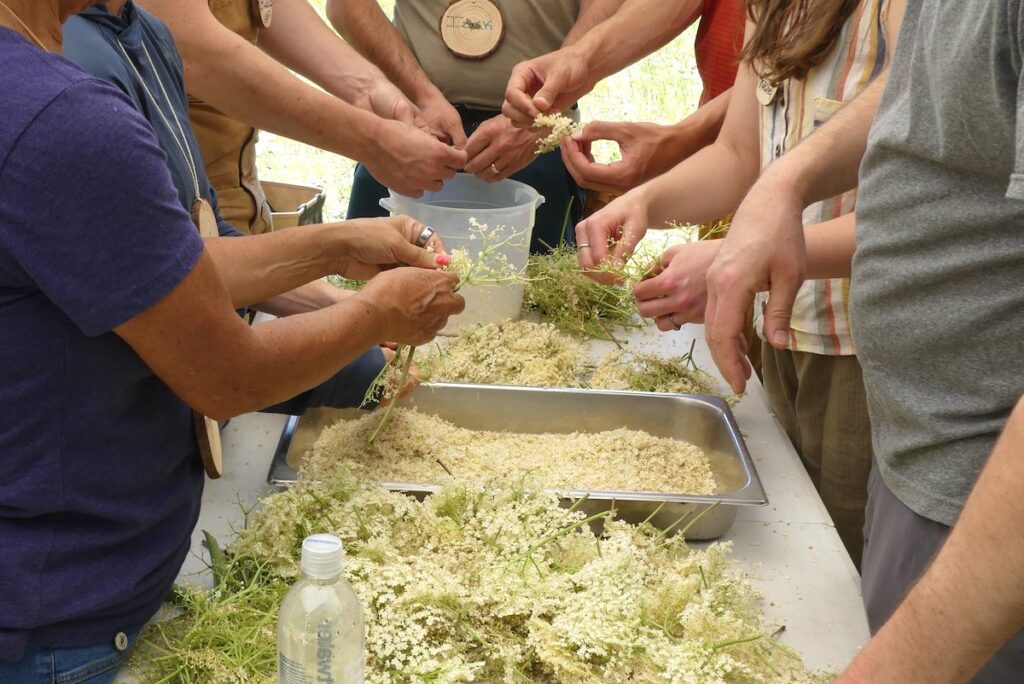
“Yesterday, all I did was put a pot of water on the fire. Somebody came up with some kale. I said, let me get you a cutting board and a knife … I handed it to her, she’s cutting, and then another person wandered over to help. After about three minutes, I left. Twenty minutes later, they had their meal. It was like the actual Stone Soup story,” she told me.
Today, this “many hands” approach and generosity of spirit are at the core of the gathering.
“The people who work here put their heart and soul into this, and you can tell.” Seva Scott told me as we chatted between classes. She was attending with two friends, Katya Georgiva and Mariya Ivanova, all living in the Detroit area by way of Bulgaria.
Georgiva nodded: “Passion brings people into community.”
The women grew up in villages before immigrating. Back home, grandmothers cooked food from home gardens, and it was normal to make your own yogurt. People walked everywhere. The modern American lifestyle was a big change for them, with its prevalence of convenience foods, flavorless big-box store vegetables, and car dependence.
Attending the gathering allowed them to be among others who value the healthy, fresh food and slower lifestyles that they grew up with. It also served as a reminder that you don’t need much to experience a deep sense of well-being. The event was somewhat rugged with its days of camping, ticks and mosquitoes, and a pack-out-your-trash credo. Despite the rustic setting, Ivanova still felt a sense of luxury at the event. “I feel like I’m in an all-inclusive hotel in my own way,” she laughed.
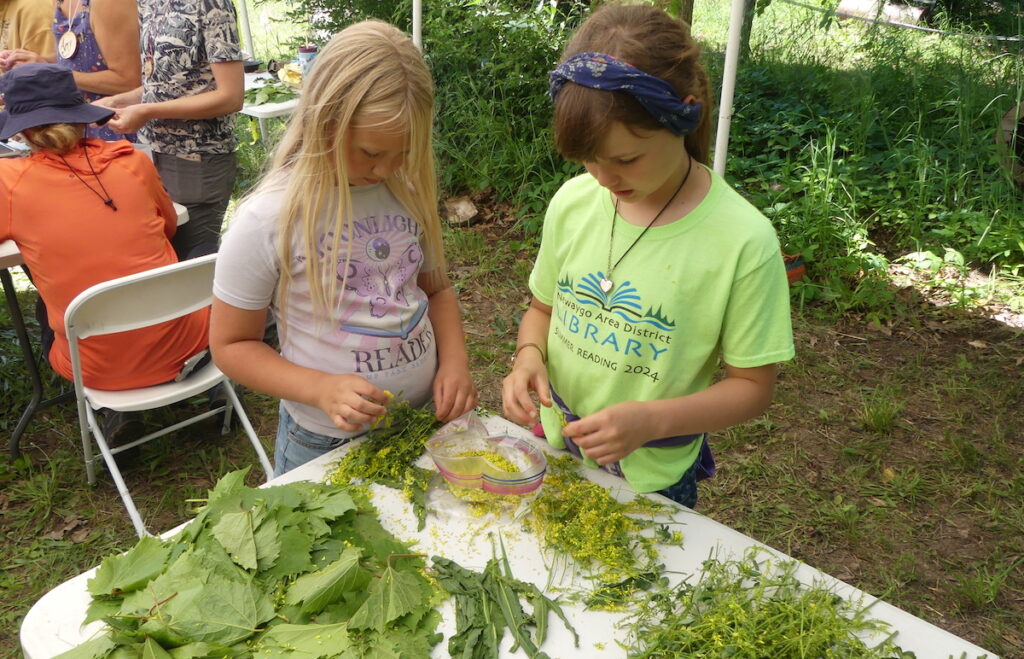
Scott added, “We lost this with the industrial age. It’s nice to see kids not on their phones.”
As for the event’s future? Mifsud hopes that it keeps going, continuing to evolve organically. “If the event wants to change, it’ll tell us it wants to change, and we’ll change it,” she said.
After 15 years of shepherding the event to what it is today, I asked her what she is most proud of. “It’s just the community. Everyone is such a community.”
At the end of the weekend, people dismantled their camps and caravanned out of the bowl-shaped field, waving goodbye to one another as they returned to the fast pace of modern life. With luck, they took with them one of the weekend teachings from the plants: nourishment is available if you slow down and know where to look.
To learn more about Will Forage for Food or the Great Lakes Foragers Gathering, visit willforageforfood.com.