
ADRIAN — A double dose of English composer Edward Elgar is on the program when the Adrian Symphony Orchestra returns to classical music this month after two pops concerts in a row.
The concert, titled “The Hidden Score,” is at 7:30 p.m. Friday, March 13, at Adrian College’s Dawson Auditorium.
A Classical Conversation with ASO music director Bruce Anthony Kiesling begins at 6:40 p.m. in the auditorium and is free to all ticketholders.
Tickets are $41/$35/$27, with discounted rates of $39/$33/$27 for senior citizens and $22/$19/$15 for students, and are available by calling 517-264-3121; online at adriansymphony.org; at the ASO offices in Mahan Hall, Adrian College, during business hours; or at the door beginning one hour before concert time.
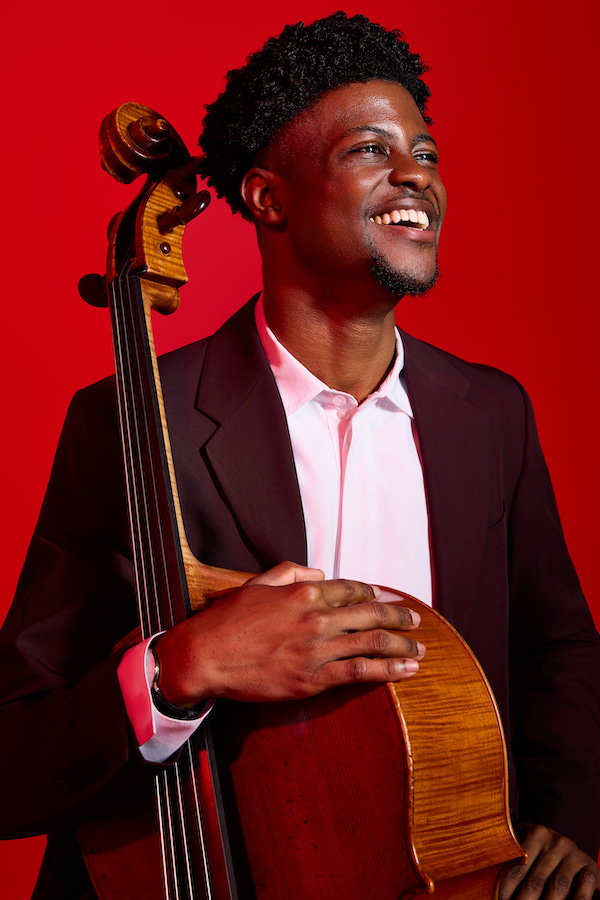
Two popular Elgar works are on the program: his Cello Concerto in E minor, featuring guest artist Sterling Elliott, and the “Enigma Variations.”
The concerto is one of the best-known such works in the repertoire, along with the one written by Dvorak about a quarter-century earlier. Elgar wrote it in the aftermath of World War I, which no doubt influenced the work’s contemplative tone
Kiesling said the orchestra programmed the piece because it was time for the ASO to bring in a cellist as a guest artist. And he’s very happy to be bringing Elliott to Adrian to play it. Kiesling recently teamed up with the soloist for a performance of Tchaikovsky’s “Variations on a Rococo Theme” in California.
“He’s just a marvelous player and a wonderful guy. … Sterling’s career is on an absolute tear. He has a growing career, especially in Europe,” Kiesling said. “And he’s someone who can negotiate this piece. It’s heartfelt and it has a reverence and beauty in a way that many concertos flirt with.
“This concerto is quiet and introspective and it’s played with depth and meaning, not fireworks.”
The concerto will round out the first half of the program. The evening’s first piece, Nicolai’s Overture to “The Merry Wives of Windsor,” was chosen by Kiesling because “it will balance the weight of the concerto,” he said.
Based on the Shakespeare play of the same name, Nicolai’s 1849 comic opera is not all that well known in the U.S. but the overture is often performed as a concert work.
“It’s so attractive and sunny,” Kiesling said. “It’ll be a perfect little opener.”
The program’s second half, and the piece that gives the concert its title “The Hidden Score,” features the hugely popular “Enigma Variations.”
“It’s one of those pieces that’s a pillar of classical music,” Kiesling said.
Elgar actually titled his work “Variations on an Original Theme.” Exactly what that theme is, however, is a secret Elgar took to his grave — hence the “Enigma” part of the piece’s better-known title.
Ever since the piece premiered in 1899, people have debated what the theme actually is. But, Kiesling pointed out, “if you knew, it would take the ‘Enigma’ out.”
The work is structured as a theme — however mysterious that theme might be — and 14 variations. Each of the variations is an homage to someone in Elgar’s life: his wife Alice, some of his friends (or, in one case, the friend’s dog), and Elgar himself, the subject of the final variation.
Its best-known section, “Nimrod,” honors his friend and publisher August Jaeger, “Jaeger” being the German word for “hunter” and Nimrod being a mighty hunter mentioned in the Old Testament.
The piece allows an orchestra to showcase some of its performers, and “we have some A-list players for this concert,” Kiesling said.
“It’s great for the orchestra to play, but audiences really gravitate to it because it’s really digestible, with all these fun little vignettes. With all these variations, you’d think it’s this disjunct work, but somehow it seems so complete.”