
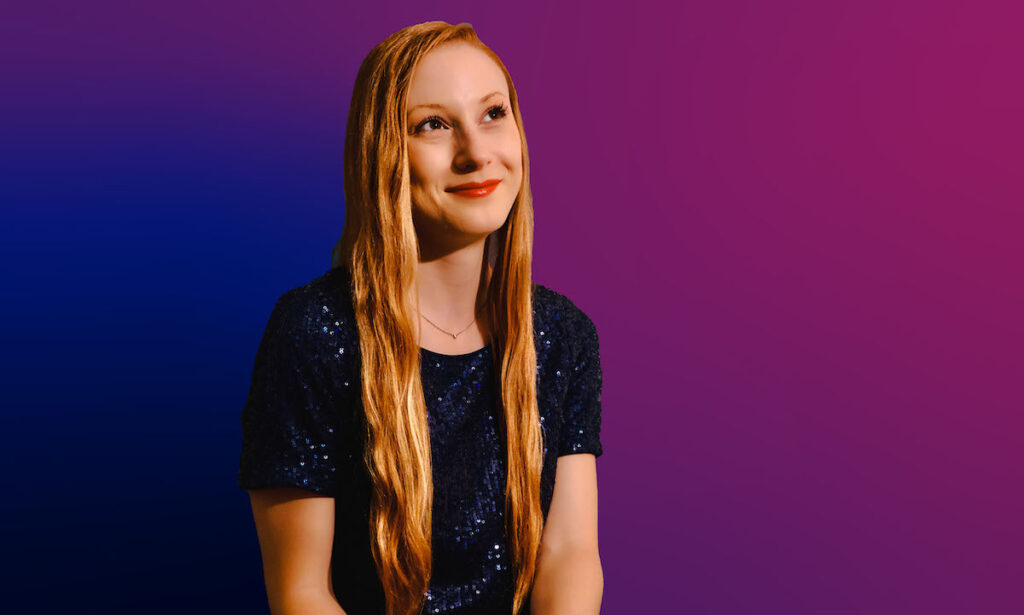
ADRIAN — A relatively new work by American composer Gala Flagello, a Maurice Ravel concerto that was influenced by everything from Mozart to jazz, and the symphony that Finnish composer Jean Sibelius began writing during a stay in Italy are on tap for the first classical concert of the Adrian Symphony Orchestra’s season.
The concert is at 3 p.m. Sunday, Nov. 16, at Adrian College’s Dawson Auditorium. A Classical Conversation with Music Director Bruce Anthony Kiesling begins at 2:10 p.m. in the auditorium and is free to all ticketholders.
Tickets are $41/$35/$27, with discounted rates of $39/$33/$27 for senior citizens and $22/$19/$15 for students. They can be ordered online at www.adriansymphony.org; by calling 517-264-3121; at the orchestra’s offices in Mahan Hall, Adrian College, during business hours; or at the door beginning one hour before the concert.
The program begins with Flagello’s 2023 work “Bravado.” It’s the second work the ASO has performed by this composer, after “Vitality” two seasons ago, and inspired the concert’s title, “Bravo Bravado.”
“Vitality” and “Bravado” were each written for some of the country’s premier summer music programs for advanced students — “Vitality” for the 2022 Aspen Music Festival orchestral readings and “Bravado” for the 2023 Tanglewood Music Festival readings.
According to the composer herself, “Bravado” explores the various connotations of that word itself: bold or reckless, daring or arrogant, confident or overbearing.
Flagello will introduce her work at the concert. Earlier in the week, she spoke to the ASO’s New Music Society prior to a rehearsal of the piece, a chance for members of that group to “get to see how the sausage is made, as it were,” Kiesling joked.
Over the years, he said, “we’ve done a nice job of building relationships with artists” who have returned for repeat performances with the ASO, and “now we get to do that with a composer.”
And having a composer able to be present for a performance of their work “brings music to life for our audience. It reminds them there’s music still being written for orchestras today.”
After Flagello’s short piece opens the concert, guest artist Rodolfo Leone will join the orchestra for a performance of Ravel’s Piano Concerto in G major.
Winner of several major international piano competitions, Leone has performed across the country and in countries including Austria, Germany, England, Italy, and China. He currently lives in Los Angeles.
Ravel’s concerto “is such a special piece,” Kiesling said. “It’s short, but it’s a little bit of everything.”
The composer finished it in 1931 and it premiered in 1932 with the pianist Marguerite Long, to whom Ravel dedicated the work.
“It really is super-fun,” Kiesling said, from the whip-crack sound that opens the piece through its very melodic second movement all the way to the fast — and virtuosic — final movement.
The concert’s second half features Sibelius’ Second Symphony, which the composer started writing while staying in a mountain villa in Italy at the prodding of an acquaintance who thought Sibelius needed the inspiration the location would bring him.
Coming on the heels of Sibelius’ very nationalistic work that thanks to this same acquaintance is known as “Finlandia,” the Second Symphony was popularly tied to Finland’s struggle for independence from Russia and even was dubbed the Symphony of Independence, although whether Sibelius himself meant it to be nationalistic has been debated ever since.
It debuted to mixed critical reviews, but great audience acclaim, in 1902 and used to be a regular part of the standard orchestral repertoire, although it’s performed less often today.
“Some of the players have told me they’re so excited to be doing it,” Kiesling said.
It’s a real challenge for musicians, especially the frenetic third movement that sets the stage for a regal, grand final movement. “The fourth movement is so spectacular,” he said. “It’s the real payoff after this journey you’ve been on.
“It’s really one of those [pieces] where you’re just swept along. So I love that quality, that it’s great for both players and audiences.”
And, given that the ASO spent the last couple of seasons focused on the music of Stravinsky and Copland, and then presented a pops concert to begin this season, it’s actually been some time since audiences got to hear the orchestra perform a symphony. “And this is a dinner plate-sized symphony,” Kiesling said.
“We’re glad to be starting the orchestral part of the season and it’s going to be a really great concert. The musicians are excited about it and so am I.”
