CAMBRIDGE TWP. — Once upon a time, one-room schoolhouses dotted the landscape across Lenawee County, serving the 187 separate school districts that existed in the county before World War II.
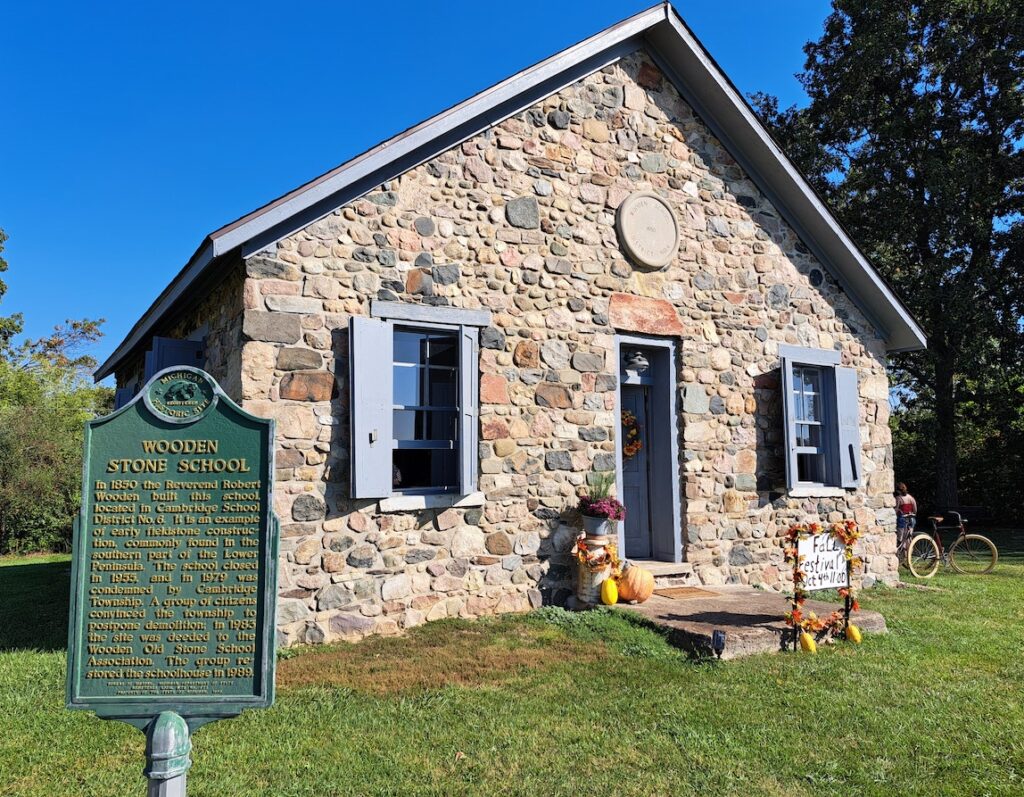
Of the 21 such schools in the Onsted area alone, one was the Wooden Stone School, built in 1850 by a Universalist minister named Robert Wooden. Wooden donated $500 — a princely sum back when the average worker earned a dollar a day — to replace a schoolhouse on the site that had burned down.
The fieldstone school, at the corner of Stephenson Road and Hawkins Highway, marked its 175th year earlier in 2025 and is the county’s oldest one-room school still in its original location. It served students in Cambridge School District No. 6 until 1955, when it was closed. It was then used by a local Boy Scout troop for its meetings for several years.
After the township condemned the building in 1979, a group of citizens who wanted to save it were successful in postponing the demolition, and in 1983 the property went to the Wooden Old Stone School Association.
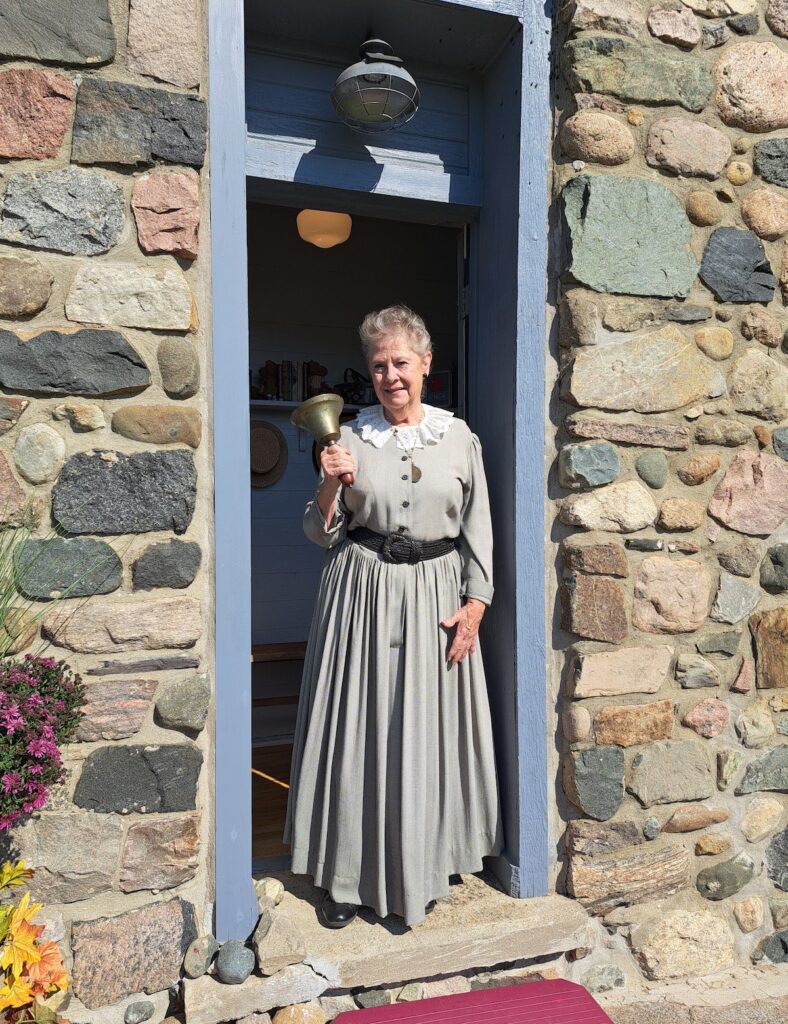
Work to bring the school back to its former glory began in 1989. “The first time we came over here, the stones were falling off” the walls, said Ron Ryan, a local historian and the association’s vice president.
“We just felt it was worth saving,” said association president Joy Luck, who was also the group’s president when the initial renovations began — and was, by marriage, part of the Wooden family herself.
More work was done on the building in 2018, especially to the walls and the roof. Although the roof originally had wood shingles, the cost of those led to using regular shingles instead.
Luck was the driving force behind raising funds for the restoration, with some members of her family doing much of the work on the building.
Today, visitors flock to events at the school, such as the inaugural Fall Festival held there early this October, and area schoolchildren take field trips there to see how education used to look and to play vintage games that might have been part of a child’s recess activities many decades ago.
“That was really the goal, to have it opened to the community and schoolkids,” Luck said.
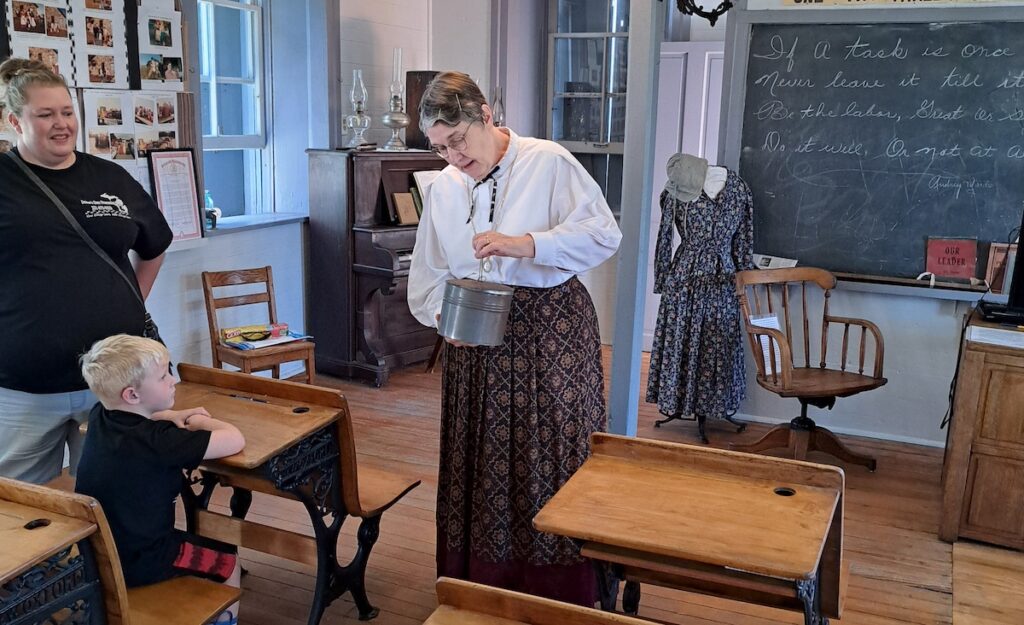
While the chalkboard is original to the school, the rest of the interior contains donated items representing the sorts of things that might have been in a typical one-room schoolhouse over the years, not items specific to the school itself or to a certain period of its history.
Those items include a lunch pail such as might have been carried by a student, a washbasin, and small slates like the ones students would have used to write their lessons on in the days before notebooks. A piano graces one corner, with a radio atop it of the sort that would have provided such school districts with a weekly music class for many years.
Although now there are rows of desks to facilitate the visiting school groups, originally the students would have sat on slabs along the room’s perimeter, taking advantage of the natural light coming through the windows, until the teacher called them forth by grade to work on a lesson.
“Everybody had a chore,” Luck said. Boys were usually assigned to bring in wood for the stove, which would have been in the center of the room for optimal heat although now the replica stove is in the room’s back, while girls brought pails of water from a nearby farmhouse because there’s no well at the school.
The trip back to a bygone era that the school provides extends to the two other buildings on the property. One, the shed that would have been used to stable the teacher’s horse, store the teacher’s carriage, and house the supply of firewood, is original to the location.
But the other building, the outhouse behind the school — completed with the “toilet paper” of the era: an old Sears, Roebuck catalog and a can full of corn cobs — actually was moved to the site from a different one-room schoolhouse in the county.
Because children attended schools like this one all together regardless of grade, “it was a family in these small schools. Everyone knew each other,” Ryan said.
Often, adults who had attended the school even ended up marrying each other, and to this day, many residents of the area either attended the Wooden Stone School or have older relatives who did.
Ryan said that keeping the school and its history alive serves a vital role.
“It’s important to show where we came from, the history of our parents and grandparents and now great-grandparents, and to show the educational process back then,” he said.
“It’s important to teach kids about all that. It was a different time, a different era.”